

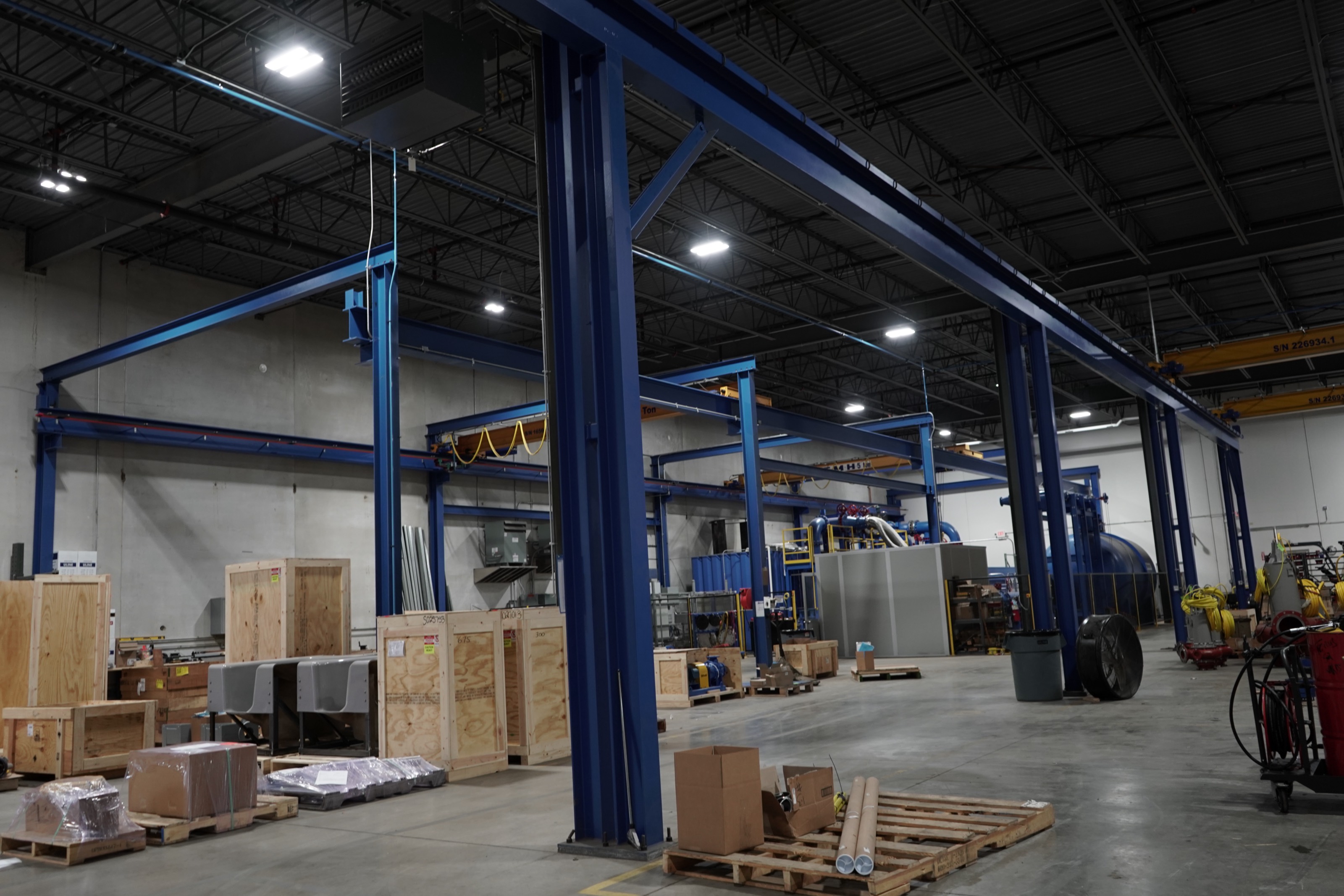
LED retrofits for commercial & industrial facilities
Fluorescent-to-LED conversion for warehouses, offices, retail, and mixed-use facilities across Chicagoland. ComEd incentives filed and managed as part of every project.
40–70%
Energy reduction
Jan 2027
Fluorescent ban
Why facilities are converting now, not later
Illinois HB2363 sets a hard deadline for fluorescent lamps. ComEd incentive budgets are allocated annually. The economics of waiting get worse on both ends.
The fluorescent ban has a fixed date
HB2363 phases out T5, T8, and T12 linear fluorescent tubes in Illinois. No extensions have been granted. After January 2027, replacement tubes are no longer available through standard distribution. Retrofitting ahead of the deadline means you choose the timeline — waiting means the timeline chooses you.
Energy reduction lands in a predictable range
Fluorescent-to-LED conversions consistently produce 40–70% reductions in lighting energy consumption, depending on fixture type, hours of operation, and existing conditions. The range is narrow enough to model accurately before any work begins.
ComEd incentives scale with the load you eliminate
ComEd’s Standard Offering pays per watt reduced — the more load your retrofit removes, the larger the incentive. The exact amount depends on facility size, fixture mix, and qualifying pathway, and we calculate it during the free assessment.
Payback periods that fit a capital budget cycle
Energy savings alone return the investment on a predictable schedule. Maintenance savings — no more re-lamping, no ballast replacements — accelerate the return further. We model your payback during the assessment.
What a commercial LED retrofit typically covers
Every facility has a different fixture mix. Troffers in the drop ceiling, high bays in the warehouse, wall packs on the perimeter, emergency fixtures in the stairwell. A complete retrofit addresses all of them under one scope and one incentive filing.
Linear fluorescent troffers
T8 and T12 tubes in 2×4 and 2×2 recessed troffers — the most common commercial fixture. Type A (tube swap), Type B (ballast bypass), or Type C (driver replacement) depending on fixture condition and incentive pathway.
High bay & low bay fixtures
HID and fluorescent high bays in warehouses, manufacturing, and distribution — typically 150W–400W fixtures replaced with 100W–200W LED equivalents. Mounting heights from 15 to 40+ feet.
Exterior and parking lot
Wall packs, pole-mounted area lights, and bollards. Existing HID floods replaced with LED, typically 50–70% wattage reduction. Photocell and scheduling controls included.
Stairwell and emergency
Code-required stairwell and egress lighting upgraded to LED with integral battery backup where applicable.
Office and common area
Pendant, recessed, and surface-mount fixtures in lobbies, conference rooms, break rooms, and corridors. Tunable white and dimming capability available where tenant improvement specs require it.
Controls integration
Occupancy sensors, daylight harvesting, and networked lighting controls (NLC) layered onto the retrofit scope when the energy savings model supports it.
Typical project economics for a Chicagoland warehouse
Numbers reflect a representative 150,000–200,000 sq ft distribution facility. Your incentive, energy savings, maintenance savings, and payback are modeled from your own inventory and rates.
- Fixtures replaced
- 300–500
- Energy reduction
- 55–67%
Typical scenario. Your facility's numbers depend on fixture inventory, operating hours, and utility rate. We model your specific economics during the free assessment.
How we approach fixture selection and installation
Three decisions shape every retrofit: what fixture to install, which retrofit type fits the existing housing, and how to phase the work without disrupting operations. Each decision is driven by the audit findings, not by product availability or installer preference.
Manufacturer-agnostic fixture selection
We spec fixtures based on photometric performance, DLC qualification, warranty terms, and incentive eligibility — not brand loyalty. The fixture family is selected after the audit, not before, because the right product depends on mounting conditions, ceiling height, and the ComEd pathway that produces the best economics for the project.
Type A, B, or C — matched to the facility condition
Type A (tube replacement) is fastest but limits fixture performance and future flexibility. Type B (ballast bypass) eliminates the ballast as a failure point. Type C (LED driver) provides the most control and longest life. The right choice depends on the fixture housing condition, the incentive structure, and whether controls are part of the scope. We recommend based on the audit findings, not on inventory.
Installation phased to keep the facility operating
Occupied facilities get phased installation — floor by floor, zone by zone, shift by shift. We coordinate with facility operations to avoid dark time in active work areas. Most commercial retrofits complete in 1–3 weeks depending on fixture count and access conditions. High bay work requiring lifts or scaffolding is scheduled to minimize aisle closures.
Codes, incentives, and installation standards
Every LED retrofit is an electrical project — permitted, inspected, and built to the codes that govern commercial work in Illinois. These are the standards we work to.
- ComEd EESP
- Enrolled Energy Efficiency Service Provider. Pre-qualified to file incentive applications directly — no third-party aggregator required.
- NEC 2020
- All work permitted and inspected per the National Electrical Code as adopted by the local AHJ.
- DLC QPL
- Fixtures specified from the DesignLights Consortium Qualified Products List — the utility standard for incentive-eligible LED products.
- HB2363
- Illinois Clean Lighting Act. Phases out linear fluorescent lamps by January 2027. Retrofit projects completed before the deadline avoid the supply-constrained replacement market.
From assessment to verification in five steps
We manage the process end to end. Your total time commitment across all five steps is about one hour — a 15-minute walkthrough, a 30-minute proposal review, a signature on the utility authorization, and a final walkthrough at closeout. Everything else is on us: 60–120 hours of work on our side.
Site assessment
We walk the facility with you or your maintenance lead. Every fixture gets counted, photographed, and logged — type, wattage, mounting height, condition. Takes 1–4 hours depending on facility size.
Your time: about 15 min
Design & proposal
We model the energy savings, calculate ComEd incentives, select fixture families, and build a fixed-price proposal. You get a single document: what gets replaced, what it costs, what ComEd covers, and the payback period.
Your time: about 30 min
Incentive filing
We prepare and submit the ComEd application under the pathway that fits your project — Standard or custom. You sign the utility authorization. We handle the rest.
Your time: a signature
Installation
Licensed electricians. Phased schedule coordinated with your operations. Old fixtures removed and recycled. New fixtures installed, circuited, and tested zone by zone. Zero dark time in occupied areas.
Verification & closeout
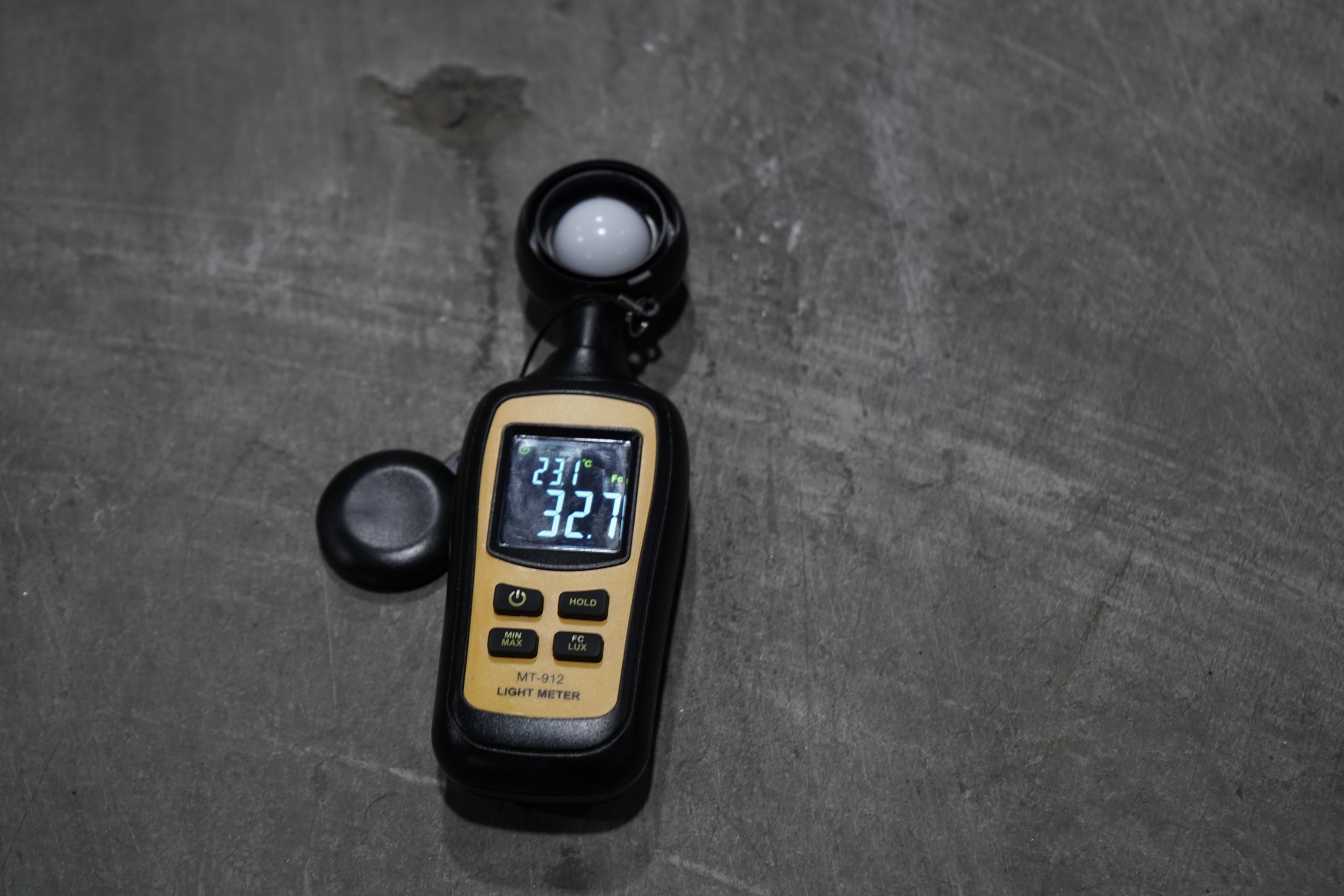
Post-install light level readings confirm performance. ComEd post-inspection is scheduled and managed. Incentive check is delivered. Warranty documentation is handed off. Project complete.
Your time: about 15 min
Facility types we retrofit regularly
Every facility has different fixture mixes, ceiling heights, and operating conditions. Here's where we work most often.
Warehouses & distribution
High bays at 20–40 ft, linear fixtures in pick/pack areas, exterior dock and lot lighting. High fixture counts, high savings potential.
Office buildings
2×4 troffers in open plan, recessed downlights in corridors, parking garage fixtures. Tenant coordination required for occupied suites.
Retail & mixed-use
Storefront, back-of-house, common area, and exterior signage lighting. Phasing around tenant hours.
Industrial & manufacturing
High bay, task lighting, cleanroom and controlled-environment fixtures. Vibration-rated and vapor-tight housings where conditions require them.
Get your free LED retrofit assessment
We'll survey your facility, count every fixture, model your energy savings, and identify which ComEd incentives apply — at no cost and no obligation.